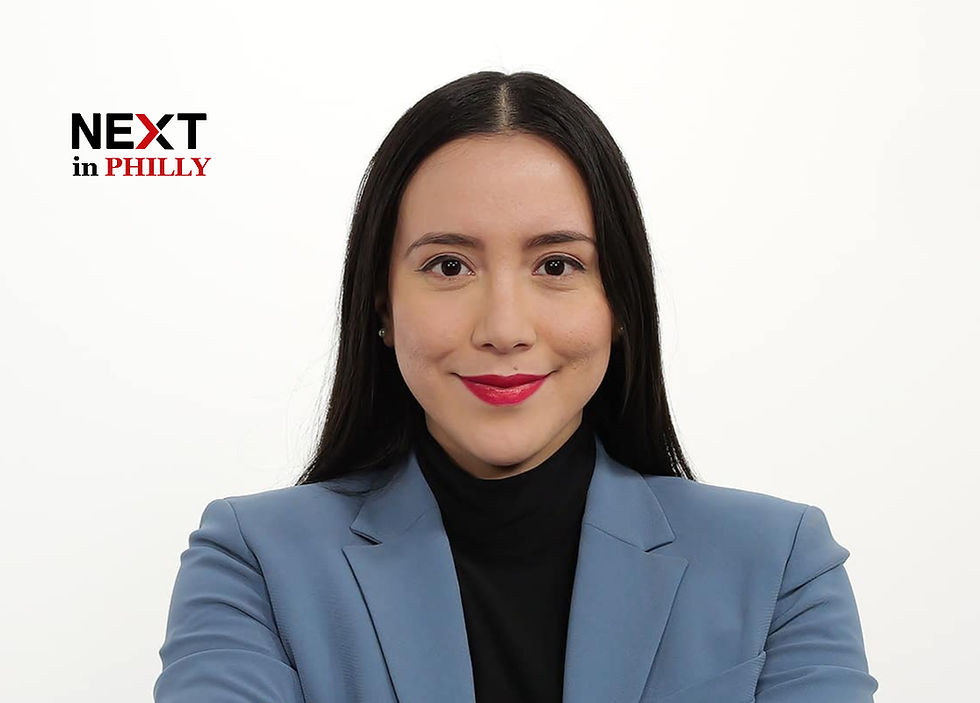
Next in Philly: Kristal Sotomayor on Storytelling, Immigration, and Who Gets Seen

Updated: Apr 24

What happens when a personal story becomes a political movement? In this edition of Next in Philly, Kristal Sotomayor, an award-winning nonbinary Peruvian American filmmaker based in Philadelphia, is answering that question through their work—one film at a time.
Sotomayor has spent the past decade building a career rooted in storytelling that centers Latino, immigrant, and queer communities. Through their production company, they are not just making films—they are challenging who gets seen, who gets heard, and ultimately, who gets to shape the narrative in today’s media landscape.
Their documentary Expanding Sanctuary began with something deeply personal: a mother trying to reunite with her family. But as the story unfolded, it evolved into something much larger—a community-led fight against police data-sharing with ICE and a broader movement for immigrant rights. Over six years, the project grew alongside the people it followed, shifting from documentation into collaboration and collective storytelling.

At its core, the film is about more than policy. It’s about the everyday moments where the personal becomes political—family dinners, community meetings, and acts of resistance—and how those moments shape real change. For Kristal Sotomayor, storytelling is not neutral. It’s a tool—one that has historically been controlled by a narrow set of voices, and one that they are actively working to reclaim.
That intentionality shows up in every part of the process. From building a crew made up of Latinx, immigrant, and gender-expansive collaborators to working directly with community organizations, Sotomayor’s approach challenges traditional media frameworks. Rather than focusing solely on trauma, their work highlights agency, leadership, and collective power—offering a more complete and human portrayal of communities that are often reduced to stereotypes.
At the same time, Kristal Sotomayor is navigating an industry that is becoming increasingly difficult for independent filmmakers. Funding cuts, media consolidation, and the dominance of major streaming platforms have made it harder for diverse voices to break through. Opportunities that once existed through public broadcasting and smaller distribution channels are shrinking, limiting access for filmmakers telling community-centered stories.
In response, Sotomayor has embraced a more independent approach—building direct connections with audiences, collaborating with grassroots organizations, and creating new pathways for distribution. It’s a strategy rooted in both necessity and purpose: ensuring that the stories being told remain authentic and accessible to the communities they represent.
Philadelphia plays a central role in that work. More than just a backdrop, the city represents the intersection of identity, policy, and lived experience. While Philadelphia has long positioned itself as a welcoming city, Sotomayor’s work reflects the tension between that narrative and the realities faced by immigrant communities navigating complex systems. Through film, they capture both the challenges and the resilience that define those experiences.
With national attention increasingly turning toward Philadelphia in the coming years, the role of local storytellers becomes even more critical. How a city is seen—and who gets to shape that narrative—has real implications not just culturally, but politically and socially.
For Kristal Sotomayor, what comes next is about continuing to build. New projects in development expand beyond traditional storytelling, blending experimental approaches with narratives rooted in identity, culture, and imagination. Whether documenting real-world movements or creating more abstract, creative work, the throughline remains the same: telling stories that feel true.
At a time when representation is shrinking and access is becoming more limited, their work serves as both a response and a reminder. Storytelling still matters—and who gets to tell the story matters even more.